The Real Cost of a Missed Renewal
An iqama or commercial registration that expires without renewal is never free: late fines, suspended services, and blocked transactions. How organized companies still miss renewals, and how expiry reminders prevent it.

The Real Cost of a Missed Renewal
A government document never expires suddenly; its expiry date has been printed on it since the day it was issued. Yet the same story repeats in companies of every size: an employee's iqama expires without renewal, or a commercial registration passes its date, and no one discovers it until a transaction stalls or a fine arrives. The irony is that late-renewal fines are among the easiest losses to avoid, because the date is fully known in advance. The only requirement is that it must not pass in silence.
What actually happens when a document expires
An expired iqama means more than late fees. The employee's basic services stop working, from banking to travel, and the company carries the violation as the employer. An expired commercial registration freezes the company's official transactions: updating records with banks, entering tenders, signing contracts in the company's name. An expired municipal or civil defense license puts the premises themselves in violation, and the consequences can reach closure until the status is corrected.
The common thread is that the damage goes beyond the fine itself. A frozen transaction delays work that had a deadline, an employee with a lapsed iqama cannot do his job normally, and fixing the situation after the date has passed consumes several times the effort the renewal would have taken on time.
Why organized companies still fall into this
The comfortable answer is that the responsible employee was careless, but that is rarely the correct one. The recurring pattern is follow-up scattered across owners: HR tracks iqamas, finance tracks the zakat certificate, the branch manager tracks the municipal license, and each uses a private tool, from a reminder on a personal phone to a sticky note. When one of them leaves or changes roles, the documents they were watching drop out of the company's memory entirely.
It gets more complicated because some renewals are a chain rather than a single step: renewing one document requires settled obligations or another document still in force, so a delay in one link delays the whole chain. Whoever discovers the expiry a week early may find the procedures themselves need more than a week.
From memory to a system
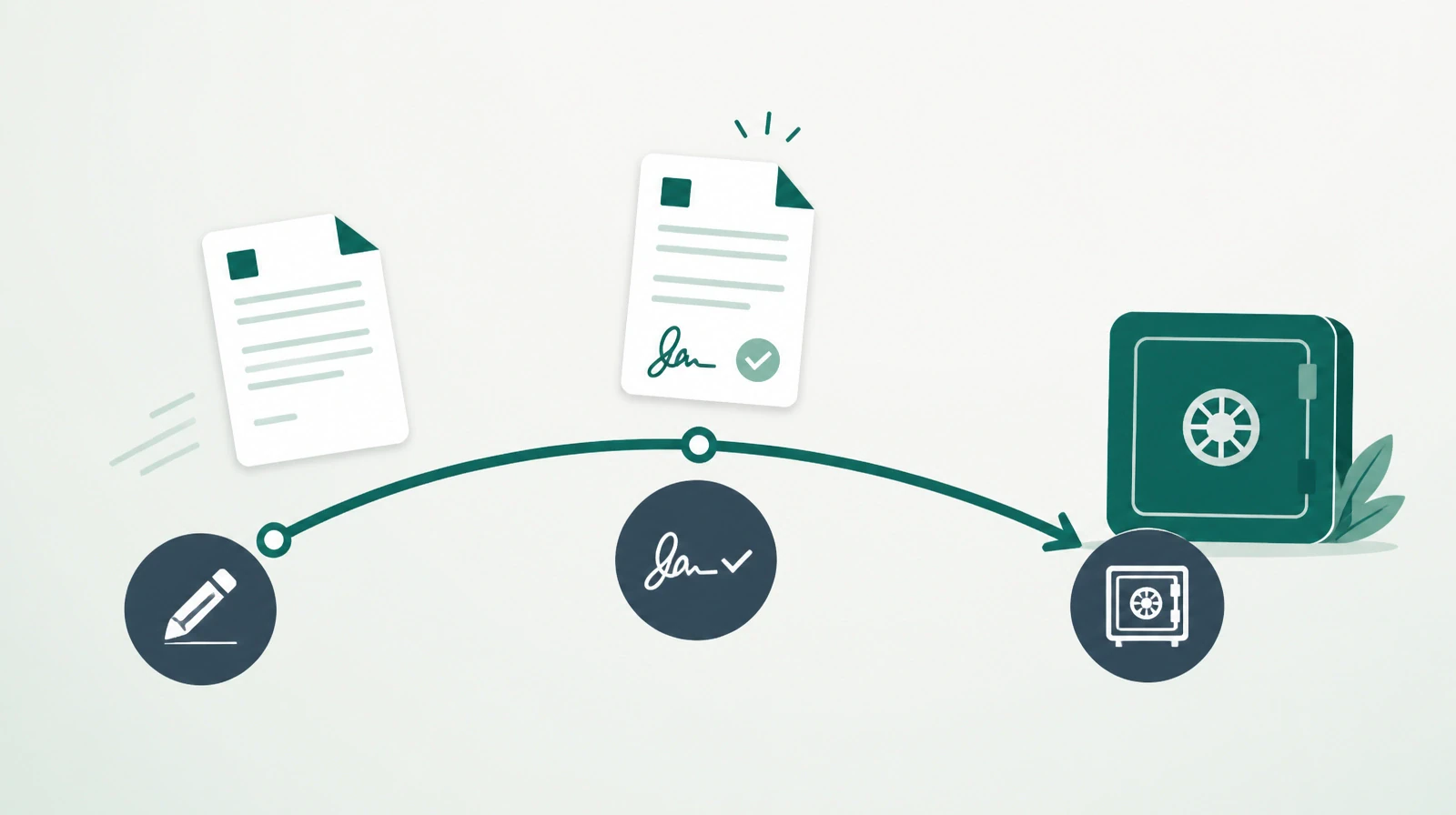
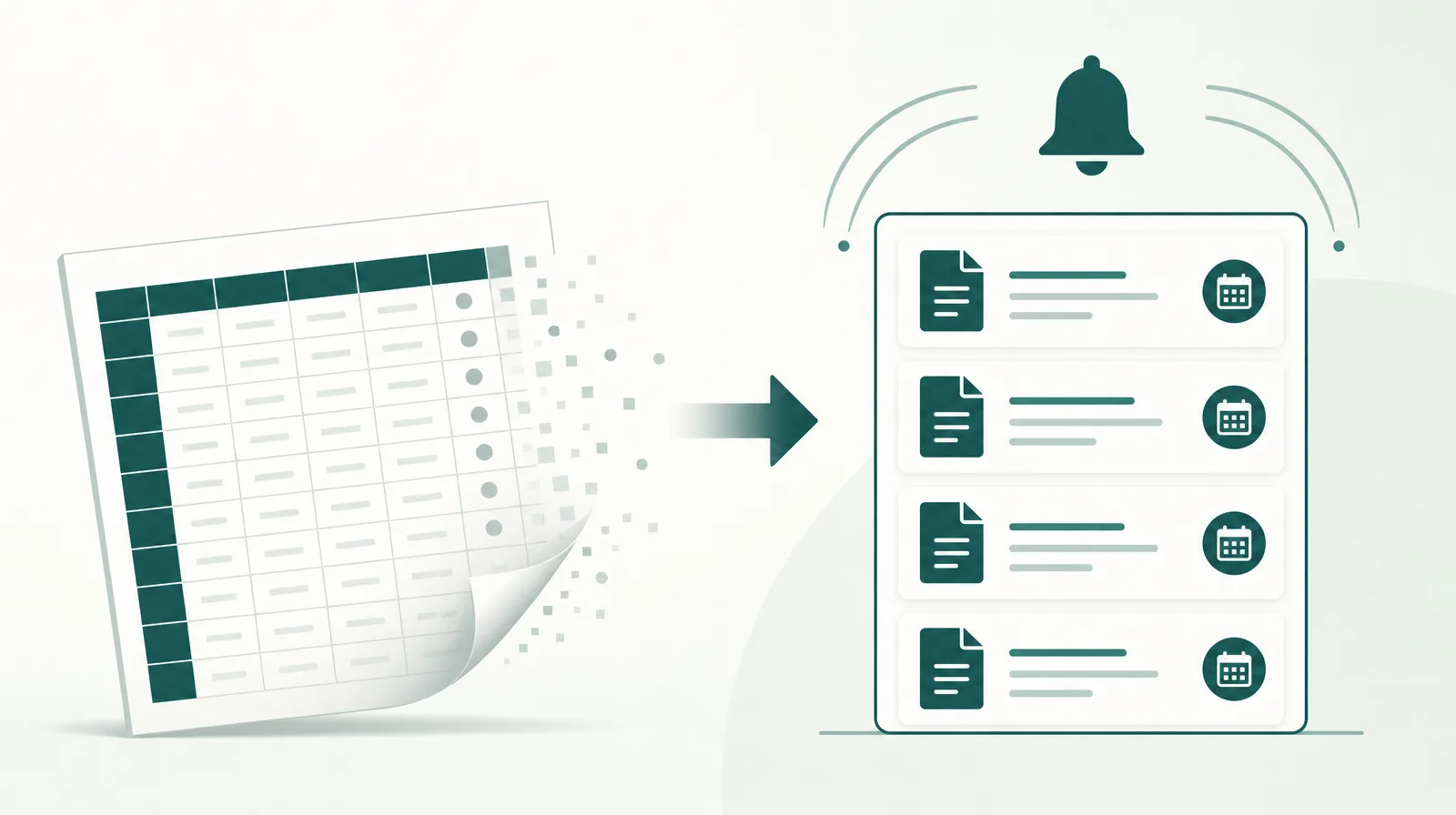
The companies that got past this problem didn't find employees who never forget; they moved the follow-up from memory into a system. When government documents are registered in a document and contract management system with their expiry dates, the system sends document expiry reminders automatically, early enough to complete the procedures, and shows in one view what is approaching its date and what is already past it. The date is no longer information stored on someone's phone; it is a commitment visible to the entire management.
The value of this approach is that it fixes the real point of failure, which is follow-up fragmented across tools and people. We wrote about that side in more detail in tracking government licenses: why spreadsheets fail; the short version is that a sheet stores dates but alerts no one to them.
The practical step
List every government document that belongs to your company and its employees, then put two questions against each one: when does it expire, and who will know a month before it does? Any document without a confident answer to the second question is a deferred fine waiting for its date.
Contact us for a demo of how your company's documents can run on reminders that depend on no one's memory.